 Shed Notes
Five Plants on One Label, Read Like Five Tools on a Shed Wall
Plant Therapy's Brain Power holds oat seed, gotu kola, rosemary, licorice and lion's mane in organic glycerin. I hung each one on the pegboard and checked what job it was tested for.

This is a paid advertisement. Sponsored by Plant Therapy, Inc.

Stanley Oberg is the name this desk signs with, and the shed in this story is the one at the bottom of the yard where it's written.
What this page says about the bottle comes from the seller's product page, the photographs of its label, its return terms and its own review system, all read in September 2026.
Let me start with a question, and you can answer it honestly, because nobody's keeping score.
Have you ever walked out to the garage or the shed, opened the door, and stood there with no idea what you came out for?
I have.
More times this year than I'd like to count, and always with the door still in my hand.
I usually find it again.
I walk back to the kitchen, see the loose hinge on the cabinet, and there it is: the screwdriver.
It's not only the shed, is it?
It's the name of the fellow from church who waves at you in the hardware store, sitting right on the tip of your tongue.
It's reading the same paragraph of the paper twice, then a third time, because your eyes got to the bottom and the rest of you didn't come along.
It's the pair of reading glasses you're wearing on your head while you look for them.
None of that is an emergency. It's an ordinary Tuesday for a lot of us.
I want to be plain about that from the first line.
This page isn't about anything frightening, and it isn't going to try to scare you into anything.
It's about the ordinary slips most men my age notice, and about one small bottle that's sold with the words "focus and clarity" on the front.
I read that bottle the only way I know how to read anything, which is the way I read the wall of my shed.
Every tool on that wall has a job, and every tool hangs inside its own painted outline.
When one's missing, you see the empty shape right away, and you know exactly what to go looking for.
So I did the same with the label.
Five plants are printed on it, and I gave each one an outline, a job, and a plain question: what was it actually tested for, and at what size?
Some of the answers are good.
Some are thin, one is a flat no, and one plant is in there mostly for the taste, and I'll tell you which is which.
The Shed Door, the Pegboard, and What I Came Out Here For
I've had this shed for twenty-six years.
It's eight feet by ten, it leans a little to the east, and it smells like cut grass, oil and old cedar.

The pegboard went up the spring after I retired.
My wife said the shed looked like a junk drawer somebody had stepped on, and she wasn't wrong.
So I bought a sheet of pegboard, a can of dark paint and a box of hooks.
I hung every tool, traced around it, and filled in the shape.
Why go to all that trouble for a hammer?
Because a traced outline does one thing better than any memory I've got.
It tells you what's missing without asking you to remember it.
You don't have to think "where's the level?" because the empty level shape tells you.

I've come to think that's the honest shape of most memory slips at our age.
It isn't that the tool is gone forever; it's that nobody traced the outline.
The name of the man at the hardware store is in there somewhere.
It just isn't hanging where you reached for it.
So is it normal to walk into a room and forget why?
For most of us, yes, and it happens to younger people too.
A busy morning, a short night, not enough water and three things on your mind at once will do it to anybody.
I've done it at forty and I'll do it at eighty, and so will you.
That doesn't mean you have to like it.
And it doesn't mean you can't look at what might help you feel a little sharper on an ordinary morning.
Forgetting why you walked into the shed is common, and wanting fewer of those moments is reasonable. Both are true at once.
If the slips ever worry you, though, if they feel like more than an ordinary morning, the right place to take that worry is your own clinician.
Not a bottle, not a page like this one, and not a quiz on the internet.
I'll say that once, clearly, and then get on with what this page is actually about.
Five plants, one label, and a wall of outlines.
Why Lists, Coffee and Crosswords Only Go So Far
Before I ever looked at a bottle, I tried the things every man tries.
You've probably tried them too.
The list on the door.
I kept a pad of paper on a nail by the shed door, and I wrote down what I came out for before I came out.
It works, as long as you remember to write on it.
Which is the same problem wearing a different hat.
The second cup of coffee.
Coffee wakes me up, and I'm not giving it up for anybody.
But being awake isn't the same as being on target.
I've been wide awake and still stood in the shed door holding nothing.
The crossword.
I do the one in the Sunday paper, and I'm better at it than I was five years ago.
Mostly, I think, because I've learned the kind of words the man who writes it likes.
That's a skill, and I'm proud of it, but it's a skill at crosswords.
The list, the coffee and the crossword all help. None of them is the whole job.
Then what else goes into it?
Most of what's worth doing is plain and slow: sleep, water, walking, what's on the plate and what's in the evening glass.
I'll come back to those at the end of this page, with the studies behind them.
They're the cheapest tools on the wall, and some of the best tested.

My neighbor across the fence, who has the better tomatoes and knows it, put it to me in fewer words.
He said a man our age doesn't need anything fancy, he needs a system.
He's right about the system.
And the system I trust is the one on my wall: know what each tool is for, and don't expect a screwdriver to do a hammer's job.
So when a bottle with five plants on it turned up, that's the system I used.
Not "does it work," which is a question nobody can answer from a label, but "what is each of these for, and was it tested for that?"
Why a bottle of plants, and not something else?
Because some of the plants on it were already familiar to me from the garden and the woods, and that made me curious.
Rosemary grows beside my shed door.
I've seen lion's mane on a fallen oak three times in my life, and I've eaten oats most mornings since I was a boy.
When a label names plants I already know, I want to know if it's using them the way the research did.
That's a fair question for any man to ask of anything he's thinking about buying.
Every Tool on the Wall Has a Job, and So Does Every Line on a Label
Here's the method, and it's the only one I used.
I'll lay it out now so you can check my work as we go.
- What is the plant, in plain words, and where have you already met it?
- What job does the seller say it's there to do?
- What job was it actually tested for, in whom, and for how long?
- What size was the test, and is that size anywhere near what's in the bottle?
- Is there a reason to leave it on the hook?
The fourth question is the one most pages skip.
It's the one that matters most in a shed, too.
Why does the size matter so much?
Because a tool that's the right shape and the wrong size doesn't do the job.
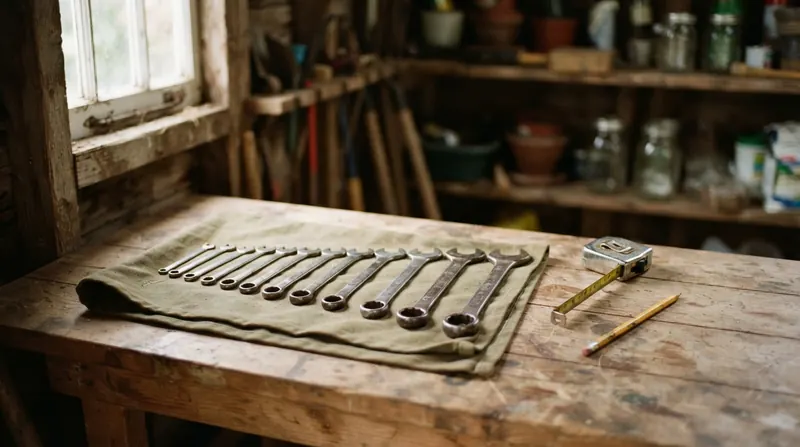
A quarter-inch wrench won't turn a half-inch bolt, no matter how good a wrench it is.
A plant that was tested at three grams a day and shows up in a bottle at a fraction of that isn't the tool from the study.
I'll give you the size from each study.
Where the bottle doesn't print its own size, I'll say that too, because it's the honest answer.
One more thing about method.
When a study came out badly for a plant, I'm going to tell you, even though it doesn't help sell anything.
A man who hides the bad news about a tool isn't doing you a favor.
He's just making sure you find out at the worst possible moment, halfway through the job.
Five plants, five outlines, five questions each. That's the whole method, and you can hold me to it.
Five Plants I Already Knew From the Garden and the Woods
Before we get to the bottle, let me introduce the five plants the way a man with a garden meets them.
Not as ingredients, but as things that grow.

Rosemary.
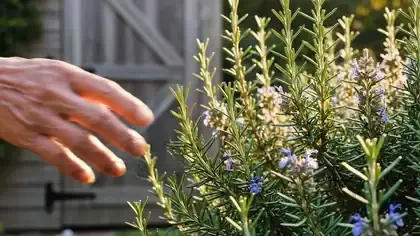
Mine grows in a big clump beside the shed door, and I brush against it every time I go in.
It's a Mediterranean shrub from the mint family, the same one that goes on a Sunday roast.
In old Greece and Rome it stood for remembrance, which is probably why it keeps turning up on labels like this one.
Oats.
Everybody knows oats in a bowl, but the oats on this label are something different.
The herbal version is the same plant, picked while the seed head is still green and soft, what growers call the "milky" stage.
It's been used as a daily tonic in European herbal tradition for generations, and it's the first plant on the label, which means there's more of it by weight than any of the others.
Gotu kola.
This one I didn't know until a few years ago, when my daughter brought one home in a pot.
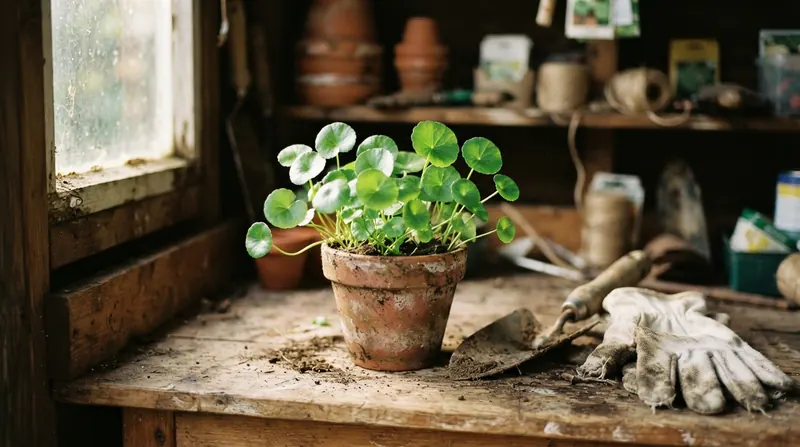
It's a small creeping plant from warm wet places, with leaves shaped like little fans.
Across South and Southeast Asia people eat it in salads, and it's been part of traditional practice there for centuries.
Licorice root.
Not the red rope from the gas station, which usually has no licorice in it at all.
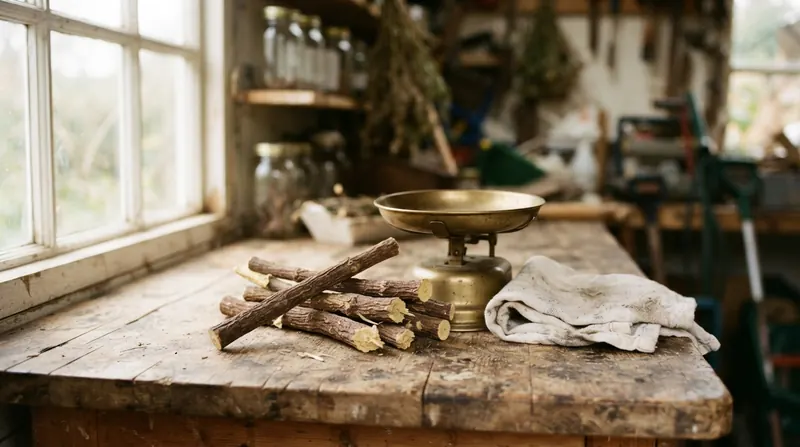
The real thing is the dried root of a plant grown across Europe and Asia, and it's naturally sweet.
In old herbal formulas it was often added to round out the taste of the others, and that's mostly what it's doing on this label, as far as I can tell.
Lion's mane.
This is the one I've actually seen in the wild, three times in all my years of walking the woods behind the county road.
It's a white mushroom with long hanging spines, like a frozen waterfall, and it grows on old oak and beech trees.
It's eaten as food in Japan, China and here, and people who cook it say it tastes a bit like crab.

So that's the wall.
Five plants: a grain picked green, a salad leaf, a kitchen herb, a sweet root and a mushroom off a log.
Could you just grow them yourself?
Some of them, and I'd encourage anybody with a sunny spot to put in a rosemary.
But growing a plant and knowing what it does at a given size are two different jobs.
The studies I'm about to walk you through used measured extracts, not a sprig from the garden, and that's the comparison that counts.
A plant in the garden is the tool. The study tells you the size of the job it was tested on.
Which brings us, finally, to the bottle that holds all five.
Focus, Clarity and Memory Are Three Jobs, Not One
Before I hang the first plant, there's one more thing worth sorting out.
The words on the front of bottles like this one get used as if they all meant the same thing.
They don't, any more than a rake and a hoe are the same tool because they both have long handles.
So here's how I think about the three words, in shed terms.
Focus is keeping your hands on the job in front of you.
It's sanding a chair leg for ten minutes without drifting off to think about the mower.
Clarity is seeing the job whole.
It's knowing which of the three things on the bench you were in the middle of when the phone rang.
Memory is the one we all worry about most, and it's really several tools on one hook.
There's remembering a name, remembering a list, remembering where you set the pliers, and remembering how to do a thing you haven't done in years.

Why does it matter which word a study measured?
Because the studies don't measure "memory" in general, any more than a carpenter measures "wood."
They measure one task at a time.
How fast you can match a symbol to a number, how many words you can hold in your head while you do something else, how quickly you hit a button when a light comes on.
When a study says a plant helped "working memory," it means one of those tasks went better.
It doesn't mean the man in the study stopped forgetting where he parked.
A study measures one task, on one kind of person, at one size. That's the honest meaning of every result on this page.
I'll name the task every time.
You can decide for yourself whether it sounds like anything you'd notice on a Tuesday morning in the shed.
And what does the bottle's own label claim?
The front of the bottle reads "Promotes Focus & Clarity."
The seller's description goes a little further.
It says the blend "aims to sharpen memory and mental agility" and describes it as supporting focus, concentration and overall cognitive function.
Next to those words sits the standard asterisk.
It points to the sentence every supplement in this country carries, that the Food and Drug Administration hasn't evaluated those statements.
That asterisk isn't a mark against the bottle; it's a mark of what kind of product it is.
A supplement is allowed to describe what it's for, and it isn't allowed to say it acts on any health condition, and this one doesn't.
"Aims to" is an honest verb. I'll hold the rest of the page to the same standard.
So now we know the three jobs, the five plants and the method.
Let's open the door and look at the thing itself.
The Bottle That Holds All Five
A good tool tells you a lot before you ever use it.
The weight in your hand, the way the handle is fitted, whether the maker put their name on it.
So I did with this bottle what I'd do with a new chisel.
I held it, turned it over, and read every word the maker put on it.
What is it, exactly?
It's called Brain Power Organic Herbal Supplement, and it's made and sold by Plant Therapy, Inc., a company in Twin Falls, Idaho.
It's a small amber glass bottle holding 30 milliliters, which is one fluid ounce.
The cap carries a glass pipette, so you measure it out rather than pour it.
What's the liquid?
Organic vegetable glycerin and purified water, and that's the whole list of other ingredients.
No alcohol, which is the first thing that caught my eye.
Most liquid herbal extracts on the store shelf are made in grain alcohol, and this one isn't.
Glycerin is a thick, sweet, clear liquid, and it's what gives the extract its body.
It's also why the directions start with "Shake well before use," because plant material settles in it while the bottle sits.
How much is in a serving?
One serving is about 1.5 milliliters, two measures of the pipette, and the label says it carries 1,755 milligrams of the five-plant extract blend.
That number is for all five together.
The label doesn't say how much of that is oat seed, how much is rosemary and so on, and I'll come back to what that means.
How do you take it?
The label says to shake it, then take a serving one to three times a day in water or juice.
The seller adds that you can take it on its own, or in tea.
It describes the taste as "naturally sweet and spicy," and the buyers I'll quote later mostly agree it's mild.
What marks are on it?
Three that I'd call worth reading.
- Certified organic by ECOCERT, an independent certifier, which is a check on how the plants were grown.
- Manufactured in the USA.
- A tamper-evident seal, and the label says not to use the bottle if it's broken.
Organic is a real, audited claim, and I'm glad to see it.
But it's a claim about how the plants were farmed, not about how strong the extract is, and those are different outlines on the wall.
What cautions does the label print?
Keep it out of reach of children, and ask a clinician before use if you have a health condition or take anything daily.
I'd take that second line seriously, and I'll tell you why when we reach licorice root.
It's the one plant on the label with a caution worth knowing about.
Here it is, whole, before we take it apart plant by plant.
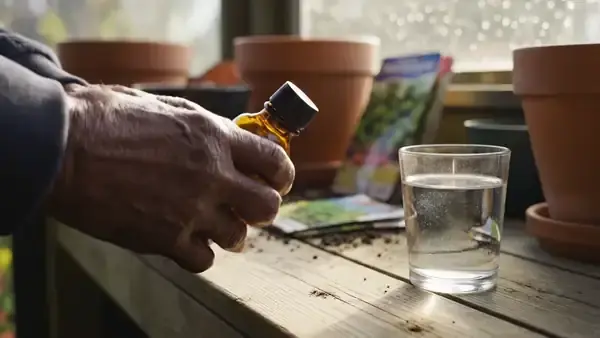
A one-ounce bottle, five organic plants in glycerin, no alcohol, one total for all five, and about twenty servings. That's the tool, before we look at the parts.
One Number for Five Plants, and What That Means for the Sizes
Before I hang each plant on its hook, let's settle the number, because it touches every one of them.
The label prints 1,755 milligrams for the blend and lists the five plants in order, heaviest first.
That's what the law asks for, and it's common.
It's called a proprietary blend, and plenty of honest products use one.
So how much oat seed is in a serving?
More than any of the other four, because it's listed first, and less than 1,755 milligrams, because it shares.
That's as far as anybody outside the company can go.
It could be most of the blend, or it could be a third, and the label doesn't say.
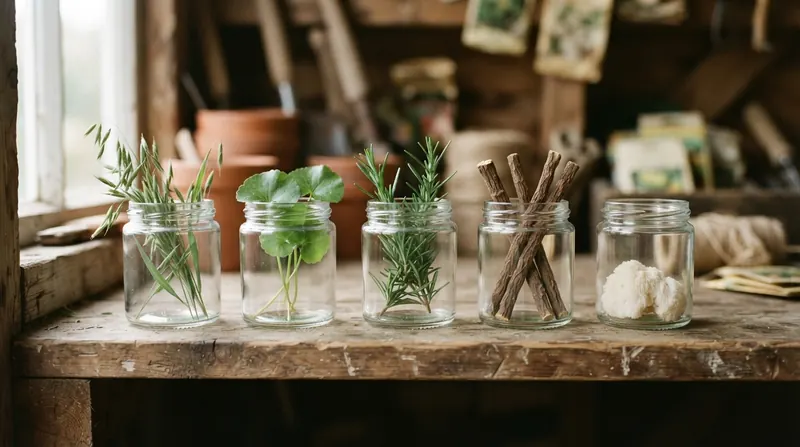
Is 1,755 milligrams the weight of dried plant?
No, and it's easy to misread.
It's the weight of finished extract in a serving, and the label doesn't print how much dried plant went into making it.
So there's no clean way to turn it back into "a teaspoon of rosemary" or "a gram of mushroom."
This is the single most useful thing to know before you read any study below.
Every study I'm going to cite tested one plant at a known size, and this bottle holds five plants at sizes it doesn't print.
That doesn't make the bottle a bad tool.
It means the studies tell you what each plant did at its own size, and they can't tell you what the bottle does.
The studies tested the parts. Nobody has tested the whole tool.
I checked, and I'll say it plainly: I found no study of these five plants together, in anyone.
Every result below is about one plant, alone, at the size that study used.
Oat Seed: The Workhorse, With Two Trials That Disagree
Oat seed hangs on the first hook, because it's first on the label.
It's the one I'd call the workhorse of the blend, the tool that gets picked up most.
What did the good trial find?
In a 29-day trial, 132 healthy adults aged 35 to 65 took a green oat extract or a placebo. [1]
The oat group did better on a working-memory task and on a test where you juggle several jobs at once.
That's a real result, in a decent number of people, and it's the best news on this whole label.
Who was in it, and at what size?
Adults from 35 to 65, so most of them younger than the man reading this.
They took a concentrated extract of the green herb in capsules, at 430 to 1,290 milligrams.
And the study was paid for by the company that makes that extract, which belongs on the hook next to the result.
What did the other trial find?
A 12-week trial gave 37 healthy adults, around 67 years old, 1,500 milligrams a day of a green oat extract. [2]
It found no change in any measure of thinking.
None, across twelve weeks, in people our age.
Oat seed: one trial in adults 35 to 65 that came out well, and one in adults around 67 that found nothing. That's the honest outline.
Which one should a man our age believe?
Both, because they're both true about what they tested.
The first says a green oat extract helped some tasks, over a month, in mostly middle-aged adults.
The second says a larger dose did nothing measurable, over three months, in people closer to our age.
If I'm being fair, and I'm trying to be, the oat seed is the plant on this label with the most research and the most mixed result.
It's the workhorse, and nobody has shown that it pulls harder for a man in his late sixties.
Gotu Kola: A Small Tool That Tested Well Once
Gotu kola hangs second.
It's the salad leaf with the fan-shaped leaves, and it has one small trial I can point to.
What did that trial find?
Twenty-eight healthy older adults took one of three doses of a gotu kola extract, or a placebo, for two months. [3]
At the highest dose, 750 milligrams a day, the group did better on a working-memory task.
They also rated themselves as more alert.
How small was it?
Small enough that each group had about seven people in it.
Seven men and women on a hook is not much of a crew.
It's a result worth knowing about, and it's a long way from a settled answer.
Has anyone looked at all the trials together?
Yes, and this is the part I promised not to hide.
A 2017 review pooled the randomized trials of gotu kola and found no significant effect on thinking-test scores compared with placebo. [4]
It did find that people taking it rated themselves more alert.
Feeling more alert and scoring higher on a test are two different outlines on the wall.
That's a fair summary of gotu kola.
People who took it said they felt more alert, and when you add up all the trials, the tests didn't move.
And the size in the bottle?
Unknown, since it's second of five in a shared 1,755 milligrams.
The trial's good result came at 750 milligrams a day of extract.
Whether a serving or two of this bottle comes near that, the label doesn't let anyone say.
Gotu kola: one small two-month trial with a good result at the top dose, a pooled review that found no change on tests, and more alertness by people's own account.
Is there a reason to leave it on the hook?
A small one, and it's the kind I'd want to know.
Skin rash has been reported with gotu kola, and there are rare reports of harm to the organ that processes what you swallow.
If you ever notice unusual tiredness, dark urine or yellowing of the skin or eyes while taking anything with it, stop and call your clinician.
Rosemary: The Tool Where a Bigger Size Did Worse
Rosemary hangs third, and it's the one I know best, since it's growing about four feet from where I'm writing this.
It also has the most interesting result on the whole wall.
What did the rosemary study find?
Twenty-eight adults with an average age of 75 took dried rosemary leaf in four different amounts, or a placebo, on separate days. [5]
At 750 milligrams of dried leaf, which is close to what you'd use in cooking, their speed on memory tasks went up compared with placebo.
At the biggest amount, 6,000 milligrams, it went the other way, and their memory speed got worse.
More rosemary was not better. The big size did worse than no rosemary at all.
I've never seen a study make the shed's oldest rule so clearly.
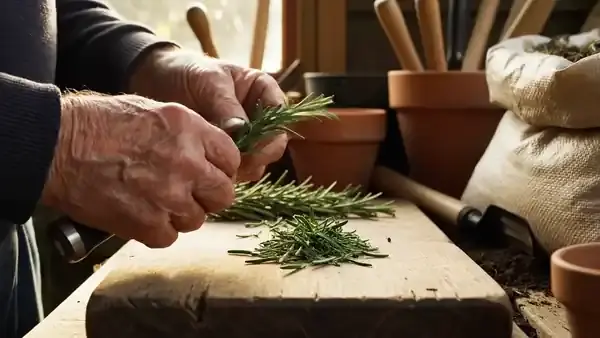
What's the shed's oldest rule?
Use the right size, not the biggest one you own.
A sledgehammer is a fine tool, but you don't hang a picture with it.
Rosemary, in that study, behaved like a tool with a right size and a wrong one.
What are the limits?
It was a single dose, on single days, in 28 people, and the effect was measured over hours.
It says nothing about taking rosemary every day for a month.
And it tested dried leaf, not a glycerin extract, so the size in this bottle isn't something I can set beside it.
Rosemary: one small study of single doses in adults around 75, with a kitchen-sized amount doing better than placebo and a large amount doing worse.
Is there a reason to leave it on the hook?
Not at kitchen sizes, which people have been using for a very long time.
The study itself is the caution: more isn't better.
If you like rosemary, you're already getting some of the best-tested size on your Sunday roast.
Lion's Mane: A Big Tool in a Small Share
Lion's mane hangs fifth on the label, the last and lightest by weight.
But it's the plant most people have heard of lately, so let's give it a fair look.
What did the best trial find?
Thirty-one healthy adults over 50 in Japan took a lion's mane preparation or a placebo every day for twelve weeks. [6]
The lion's mane group scored higher on a standard mental-status test than the placebo group.
A test of visual memory, in the same trial, didn't change.
At what size?
Three point two grams a day, which is 3,200 milligrams.
That's nearly twice the weight of this bottle's entire five-plant serving.
And lion's mane is listed last, so it's the smallest of the five shares in that serving.
3,200 milligrams in the trial. Less than 1,755 in the bottle, shared five ways, with lion's mane last.
Is there any other study?
One more, in younger people, and it's worth mentioning for what it doesn't show.
Forty-one healthy adults aged 18 to 45 took a single 1.8-gram dose, and an hour later they were faster on a color-and-word task. [7]
Twenty-eight days of the same supplement produced only a trend that didn't reach significance.
That study was in younger adults, at a dose far larger than a share of this blend.
It belongs on the hook, but it doesn't bring the bottle any closer to a trial.
Lion's mane: a real twelve-week trial in adults over 50, at a size this bottle can't reach, since its whole serving weighs less than that trial's daily dose.
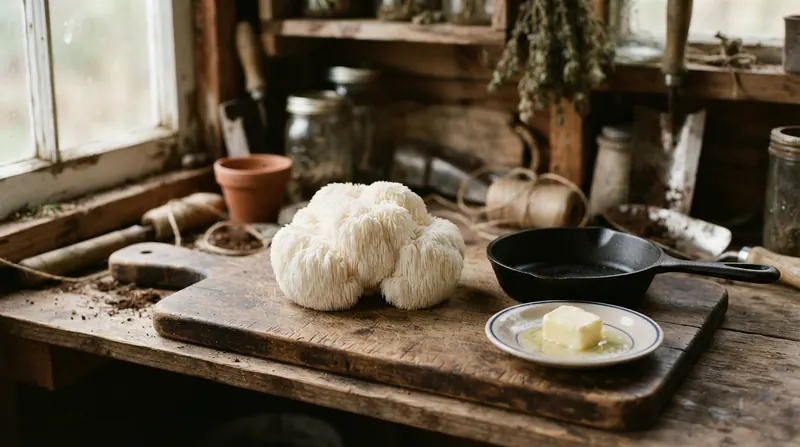
Is there a reason to leave it on the hook?
If you're allergic to mushrooms, yes, and that's the clearest one on this label.
It's generally regarded as a food.
A few people in one study reported stomach discomfort, nausea or a rash.
Licorice Root: The Handle, Not the Blade
Every good tool has two parts.
There's the blade that does the cutting, and there's the handle that makes it comfortable to hold.
Licorice root, on this label, looks to me like the handle.
It's there mostly for the taste and to round out the other four, which is what it's done in old herbal blends for centuries.
Is there a memory trial for licorice root?
I looked, and I couldn't find one in healthy adults to cite.
So I won't cite one, and I won't borrow a study about something else.
The honest outline for licorice root here is: it's sweet, it's old, and nobody has tested it for the jobs on the front of this bottle.
Then why does it matter?
Because it's the one plant on the label with a caution worth reading slowly.
Licorice root contains a compound called glycyrrhizin.
In large amounts, or taken over long stretches, it can upset the body's balance of salt and potassium.
That's why the label's own line, ask first if you take anything daily, matters most for this plant.
If you eat a lot of salt, or take anything every day, show this bottle to your pharmacist before the first serving.
At the label's sizes, that's a question to ask, not a reason to panic.
But it's the kind of question a careful man asks before he picks up a new tool, not after.
Licorice root: the handle, there for taste. No memory trial to cite, and one caution worth a word with the pharmacist.
What Has Actually Been Studied, Put Plainly
Now the whole wall is hung.
Let me step back from it, the way you'd step back from a pegboard to see what's there and what isn't.
What does the research say these plants did?
Here it is, each one at its own size, in its own people.
- A green oat extract helped a working-memory task and a multitasking test over 29 days in adults 35 to 65. [1]
- Gotu kola at 750 milligrams a day helped a working-memory task over two months in a small group of older adults. [3]
- People taking gotu kola rated themselves more alert, across the pooled trials. [4]
- A kitchen-sized single dose of dried rosemary sped up memory tasks for a few hours in adults around 75. [5]
- Lion's mane at 3.2 grams a day raised scores on a mental-status test over twelve weeks in adults over 50. [6]
And what did they not do?
That list matters just as much.
- A green oat extract did nothing measurable over twelve weeks in adults around 67. [2]
- Gotu kola didn't move thinking-test scores when all the trials were pooled. [4]
- A large dose of rosemary made memory speed worse. [5]
- Lion's mane didn't change a visual-memory test in its own trial. [6]
- Nobody has tested these five plants together, in this bottle or any other.
That's the honest picture, and I'd rather give it to you now than let you find it later.
Some good results, some flat ones, and every one of them about a single plant at a known size.
What's been studied is real. What hasn't been studied is this exact bottle.
So why would anybody buy it?
Fair question, and I'll answer it the way I'd answer it about any tool.
Some men like having these old plants in one easy, measured serving, made organically and without alcohol, from a company with a phone number and an address.
They know the research is about the parts, and they want to see for themselves what a month of it feels like on their own ordinary mornings.
That's a reasonable reason, as long as you walk in knowing the sizes.
It's not a reason to expect what any single study found, and I won't pretend otherwise.
A Normal Day With It, From the Shed Bench
If you decided to try a bottle, here's what an ordinary day might look like.
I'm describing the directions on the label, fitted into a shed morning, not promising anything about how you'd feel.
First thing, before the coffee?
The label doesn't say when in the day, only one to three times a day, in water or juice.
I'd keep it with the coffee things, where I'd see it.
A tool you can't see is a tool you don't use, which is the whole reason the pegboard went up.
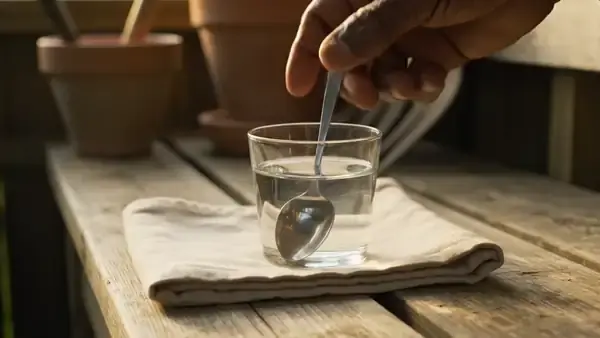
Shake it, measure it, stir it in.
The label says shake well first, then two measures of the pipette into a glass.
That's the serving, 1.5 milliliters.
It goes into water or juice, and the seller says tea works too.
Then what?
Then the morning, the same as any other.
The mower that needs a blade, the gutter on the north side, the chair my granddaughter wants painted blue.
The bottle doesn't change the list, and it isn't meant to.

How would you know if it's doing anything?
The only honest way I know is to write it down, and to write down the weeks before, too.
Keep a small notebook on the bench.
Every day, one line: did you walk into the shed and forget why, and did a name come when you reached for it?
Not how you felt about it.
Just what happened, the way you'd note the date you changed the mower oil.

How long before you'd judge it?
The studies on this page ran anywhere from a single morning to twelve weeks.
A bottle is about twenty servings.
At one a day, that's close to three weeks; at three a day, it's under a week.
So decide your serving before you start, and give it at least a full bottle at that serving.
Two weeks of notes before and three weeks during is a fair test for a man with a notebook and a pencil.
What if nothing changes?
Then write that down too, and believe it.
"Nothing changed" is an answer.
It's a better answer than a guess, and it's the one that tells you whether to hang this tool back on the wall for good.
And if a morning is better?
Look at what else happened that day before you give the bottle the credit.
A good night, a cool morning, a walk before breakfast and a second glass of water all leave the same mark on a page.
One good morning isn't a result, in the shed or anywhere else.
Who It Suits, and Who Should Hang It Back Up
Every tool on my wall is right for some jobs and wrong for others.
This bottle is the same, and I'll be as plain as I can.
Who might it suit?
A man who likes the idea of five old plants in one small serving, and who wants to try them for himself.
- You want an organic liquid extract made without alcohol, from a company that publishes an address and answers a phone.
- You're happy to take something in a glass of water or juice rather than swallow a capsule.
- You understand the research is on the single plants, at their own sizes, and not on this bottle.
- You're willing to keep simple notes for three weeks and judge by what you wrote down.
- You'd rather try something mild and plant-made than something with a long list of ingredients you can't pronounce.
Who should leave it on the hook?
Anyone in the list below, at least until they've talked to someone who knows them.
- Anyone who is allergic to mushrooms, because of the lion's mane.
- Anyone who takes anything daily and hasn't shown the bottle to a pharmacist, because of the licorice root.
- Anyone who eats a lot of salt and hasn't asked first, for the same reason.
- Anyone pregnant or nursing, since the label asks for a clinician's word first.
- Anyone who's genuinely worried about their memory, who should see their own clinician before buying anything at all.
- Anyone who expects a bottle to do the job of sleep, water, walking and a decent plate.
That last line isn't a joke.
If I had to rank the tools on this whole page, the bottle wouldn't be at the top, and I'll show you what would be.

Three Honest Objections: The Price, the Taste and the Time
Any man who's bought a tool knows the three questions that come after "does it work."
What does it cost, what's it like to use, and how long before I know?
Objection one: the price.
I'm not printing a price, because the seller sets it and changes it, and I'd rather you see the real number on the seller's own page.
What I can tell you is how to think about it.
A bottle is about twenty servings, so divide the price by the number of servings you'll take a day, and you'll know what one morning costs.
At one serving a day, a bottle lasts close to three weeks.
At three a day, it's gone in under a week, and one buyer I'll quote below said exactly that.
Shipping is charged on a single order.
The seller waives it only on repeating subscription orders, and nothing on this page asks you to start one.
Price per morning, not price per bottle. That's the number that tells you whether it's worth it to you.
Objection two: the taste.
The seller calls it naturally sweet and spicy.
The buyers I read mostly say it's mild, and a few say unusual.
One says "minimal taste," another says "pleasant," and another calls it "pretty good," and nobody I read called it bad.
The sweetness is the glycerin, and the spice is probably the rosemary and the licorice.
In a glass of water or juice, the seller says, it's easy to take, and the buyers seem to agree.
Objection three: the time.
This is the one I'd think hardest about.
The studies ran from a single morning to twelve weeks.
A bottle at one a day is about three weeks, so a fair test at that serving is at least one bottle, and more likely two or three.
If you're not willing to give it a few weeks and keep notes, I'd honestly say don't start.
Two scattered weeks of it won't tell you anything, and one of the buyers below said exactly that about herself.
Price per morning, a mild sweet taste in water, and a few weeks of notes. Those are the three real costs, and only one of them is money.
Ninety Days, and What an Opened Bottle Gets Back
A good tool store lets you bring back a tool that didn't fit the job.
This seller has return terms, and I read them so you'd know exactly what they say.
How long do you have?
Ninety days from the date of purchase.
Can you send back an opened bottle?
Yes, and that's less common than you might think.
The terms cover opened and used product, with "a partial to full refund based on the amount of product remaining."
So an opened bottle is refunded by how much is left in it.
What happens after ninety days?
The terms switch to account credit with the seller, rather than a refund to your card.
How do you start a return?
With a form on the seller's site, and the seller asks for up to 48 business hours to process it.
If you'd rather talk to a person, the number is 800-917-6577, Monday to Saturday, 8 to 6 Mountain time.
The company is Plant Therapy, Inc., at 621 Washington St. S., Suite 100, in Twin Falls, Idaho.
Is there anything the terms don't say?
A couple of things, and I'd ask about them before ordering.
They don't say who pays to ship a bottle back, and they don't say exactly how the amount left is measured.
A two-minute phone call on a Saturday morning would settle both.
Ninety days, opened bottles included, refunded by what's left inside. A fair set of terms, and a phone that's answered six days a week.
What Thirty-One Buyers Wrote
The seller's page carries its own review system, and when I read it there were 31 reviews, averaging 4.7 stars.
Twenty-four were five stars, six were four stars, and one was two stars.
I read all 31.
I left out the ones that mentioned a health condition, described ingredients the bottle doesn't contain, or came from people the system didn't mark as buyers.
I kept the ones that tell a man something useful about time and taste, and I kept the two-star review on purpose.
Here they are, word for word; the small portraits beside them are illustrations, not the reviewers.

New to the product, have not seen clear results as I have only been taking this for 2 weeks. The taste is unusual but not overpowering. Looking forward to more results with time and consistency. Love the fact it's organic. Overall, satisfied with the product!

Minimal taste, seems to keep me focused

I waited to write a review until my bottle was empty. And it got empty fast! Too fast. The only negative in my opinion.

I haven't used this on a regular basis, and will start doing that. Then, I can tell if I feel a difference.

The taste is pleasant but I haven't noticed an improvement in my "brain power".

I've had this quite a while now and sadly I just didn't notice any difference. The taste is pretty good though. I was really hoping it would help.
What do those six tell you?
Mostly what I'd expect from an honest shelf of reviews.
Two people say it's too soon to tell, and one says she hasn't been regular with it.
One says it seems to keep her focused, two noticed no difference, and nearly everybody mentions the taste.
And Marilyn's review is the one I'd underline.
At the higher serving, the bottle empties fast, and that belongs in your arithmetic before you order.
Reviews are what real buyers felt. They're worth reading, and they aren't evidence about what the plants do.
Plant Therapy, Inc., Twin Falls, Idaho · one-ounce organic liquid extract, about twenty servings · ninety days from purchase, opened bottles included
The Cheaper Tools on the Same Wall
Every pegboard has a row of cheap tools that do more work than the expensive ones.
The putty knife, the tape measure, the rag.
The same is true here, and I promised I'd come back to it.
None of what follows is in the bottle, and all of it costs less.

Water.
The Berlin Aging Study followed 1,111 adults aged 60 to 89, and about a third of them turned out to be short of water by a lab measure. [8]
Those who were short of water slipped more over time on a test of processing speed, and in how well they said they felt.
A review of eighteen studies in adults 60 and older found some evidence, though sparse, linking too little water to poorer scores on thinking tests. [9]
Those are observational studies, so they show things that travel together, not cause.
Still, a glass of water on the shed bench is the cheapest tool I own, and I fill it before the coffee now.

The plate.
The eating pattern most studied for memory is called MIND: leafy greens, berries, beans, nuts, whole grains, olive oil and fish.
In a three-year trial of 604 older adults, the group that ate that way and a group that simply ate a little less both improved their thinking scores, by about the same amount. [10]
I like that result for its honesty: changing the habit mattered, and the exact list mattered less than the headlines say.
A large Brazilian study followed 10,775 adults aged 35 to 74 for about eight years. [11]
Those who ate more from the ultra-processed shelf, the packaged snacks, sweet cereals and processed meats, slipped faster on tests of thinking and planning.
The plate over years does more work than any one bottle in any one month.
The evening glass.
In British civil servants followed for thirty years, heavier drinking went with shrinkage of the part of the brain most involved in forming memories, and with faster slipping on a word-fluency test. [12]
Light drinkers had no edge over men who didn't drink at all.
Less in the glass after supper is one of the best-studied tools on this whole wall.
The walk and the night.
I won't cite a study for these on this page, and I won't borrow one.
I'll just say that every plain-language booklet about getting older I've ever read puts a daily walk and a regular bedtime near the top.
They cost a pair of shoes and an alarm clock, and most of us own both.
Water, the plate, the evening glass, the walk and the night. None of them is in the bottle, and the first three have more behind them than most of its label.
Quick answers from the shed bench
Is this a medicine?
No. It's an organic liquid herbal supplement, and it isn't meant for any health condition.
What's in it?
Oat seed, gotu kola, rosemary, licorice root and lion's mane, 1,755 milligrams together per serving. The liquid is organic vegetable glycerin and purified water, with no alcohol.
How much of each plant is there?
The label doesn't say. It lists them heaviest first and gives one weight for all five.
Has this bottle been tested?
Not that I could find. The studies on this page tested one plant at a time, at their own sizes.
How do I take it?
Shake well, then one serving of 1.5 milliliters in water or juice, one to three times a day, by the label.
How long does a bottle last?
About twenty servings. That's close to three weeks at one a day and under a week at three.
Who should ask first?
Anyone who takes anything daily, eats a lot of salt, or is pregnant or nursing. Skip it if you're allergic to mushrooms.
Can I return an opened bottle?
Yes, within ninety days of purchase. An opened bottle is refunded by how much is left in it.
Closing the Shed Door
I finished writing this on a cool morning at the end of September.
The rosemary by the door was still green, and the oats in the neighbor's field had long since gone gold.

I've hung five plants on the wall, and I've tried to be fair to each of them.
Oat seed, the workhorse, with one good trial and one flat one.
Gotu kola, the small tool that tested well once and not when the trials were pooled.
Rosemary, the right-sized tool, where bigger was worse.
Lion's mane, a big tool at a size this bottle can't reach.
And licorice, the handle, there for the taste, with one caution worth a word with the pharmacist.
So would I buy it?
I'd buy it the way I'd buy any tool: knowing what each part is for and what it isn't.
If you want these old plants in one measured, organic serving, made without alcohol by a company that answers its phone, it's an honest bottle with an honest label.
If you want a study that says this bottle does something, there isn't one, and I'd rather tell you now.
A tool is only as good as knowing what job it's for.
Whatever you decide, keep the water on the bench, the plate honest and the evening glass small.
Those tools have more behind them than anything I can sell you, and they're already on your wall.
And the next time you open the shed door and forget why you came out, don't let it spoil the morning.
Look at the wall, find the empty outline, and go get your screwdriver.
Five garden plants, one amber ounce
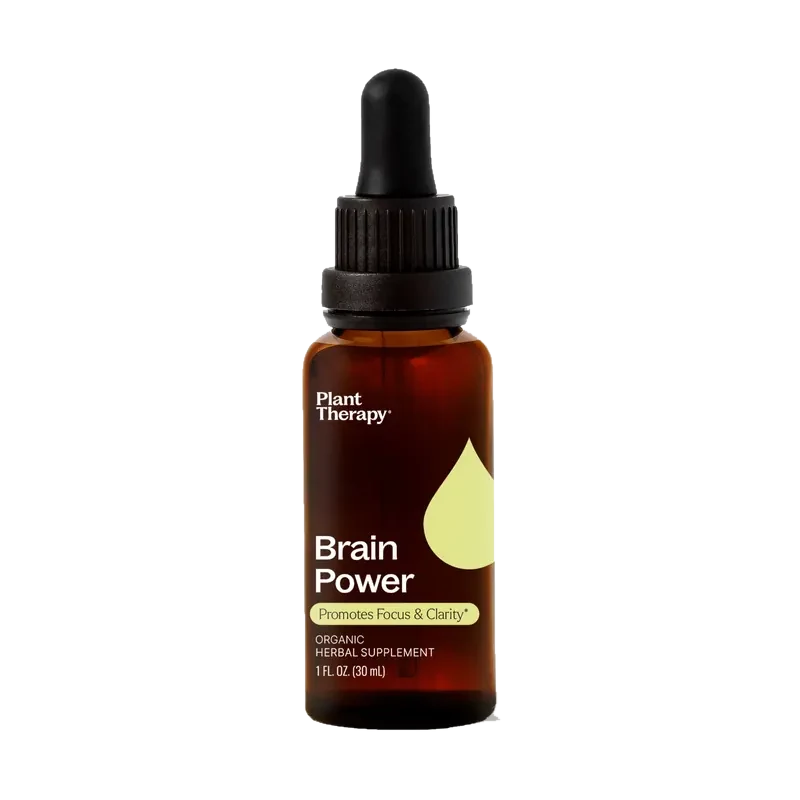
An organic, alcohol-free liquid herbal extract with five botanicals traditionally used for focus and clarity.
CHECK AVAILABILITYPlant Therapy, Inc., 621 Washington St. S., Suite 100, Twin Falls, Idaho · organic liquid extract made without alcohol, about twenty servings · 800-917-6577, Monday to Saturday · ninety days from purchase, opened bottles included
Every plant on the label, what it is, the study behind it, the size that study used and who paid for it, is written out in the ingredient and advertising guide linked at the foot of this page.
The guide also sets out what the label does and doesn't print about the split of the 1,755-milligram blend.